


Caring for Your New Asphalt Driveway in New Hampshire
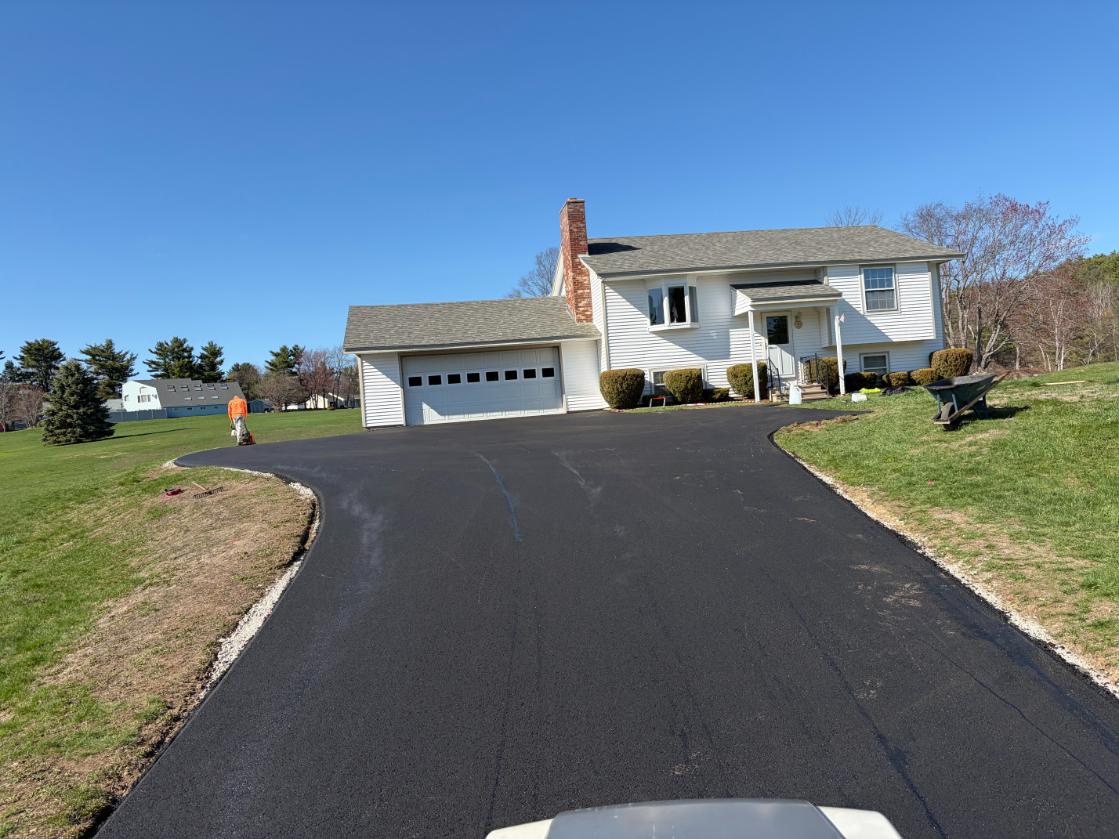
Give Your Asphalt Time to Cure
Fresh asphalt takes 12 to 24 months to fully cure. Until then, the liquid asphalt that binds the stone and sand is still hardening, so your driveway will stay a bit soft and flexible. Even fully cured, blacktop will never be as hard as concrete.
You can walk on your new driveway right away. Keep vehicles off it for at least three full days, and longer if we’re in a hot, humid stretch of July or August.
Your blacktop will soften on warm days and firm up again when temperatures drop. On a hot afternoon, you can spray it down with a garden hose to cool and temporarily harden the surface. This helps, but it isn’t required. If you notice soap-like suds, don’t worry. This is a harmless reaction between diesel fuel in the blacktop and the chlorine in some municipal water supplies, including city water. Although every effort is made to avoid puddles in your driveway, some small ones are inevitable depending on the natural slope and drainage of your ground.
Drive and Park Gently During the First Year
Most scuffs and marks on new asphalt come from driving habits. While your driveway is curing, avoid quick starts, fast turns into the driveway, and speeding. Change where you park so the same spots don’t take all the weight. Don’t turn your steering wheel while the car is standing still, because this grinds the tires into the surface.
Anything with a small, concentrated footprint can sink into soft asphalt. Lawn chairs, bike and motorcycle kickstands, trailer jacks, ladders, and even a boat trailer left sitting after a weekend on Winnisquam or Newfound Lake can leave depressions or holes. Put a piece of plywood under anything heavy. Taking these precautions during your asphalt paving first year will extend the life of your investment.
Protect the Edges
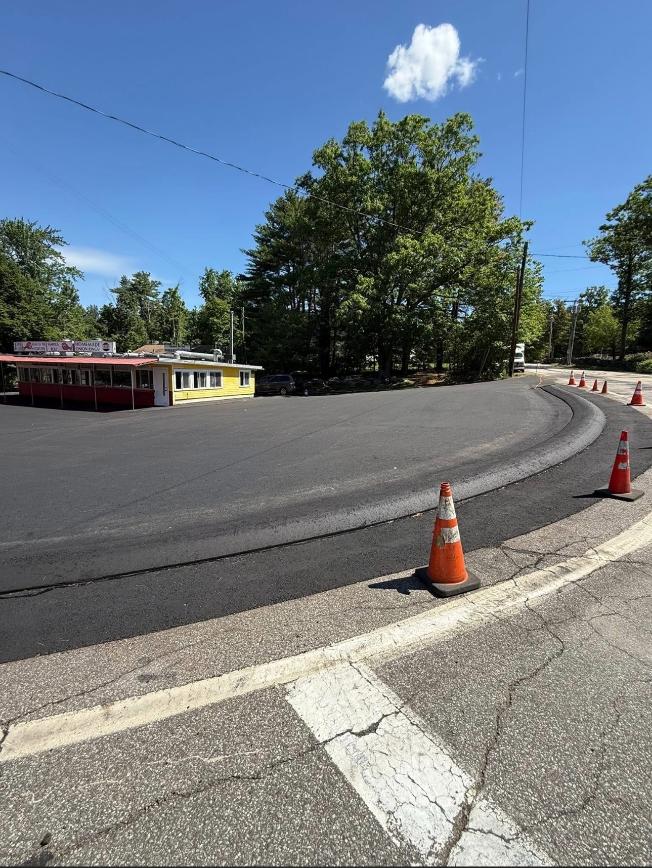
The edges are the weakest part of any driveway because they have no side support. Driving on them will cause cracking and crumbling over time. We recommend backfilling along both sides with topsoil and planting grass. This supports the edges and gives your driveway a clean, finished look once the lawn fills in.
Use plow shoes during the first winter, since a steel blade can gouge soft, uncured asphalt. If you shovel, a plastic shovel or one with a rubber edge is gentler than bare metal. Use ice melt sparingly and sweep up any excess once the ice is gone.
Why Some Areas Look Different
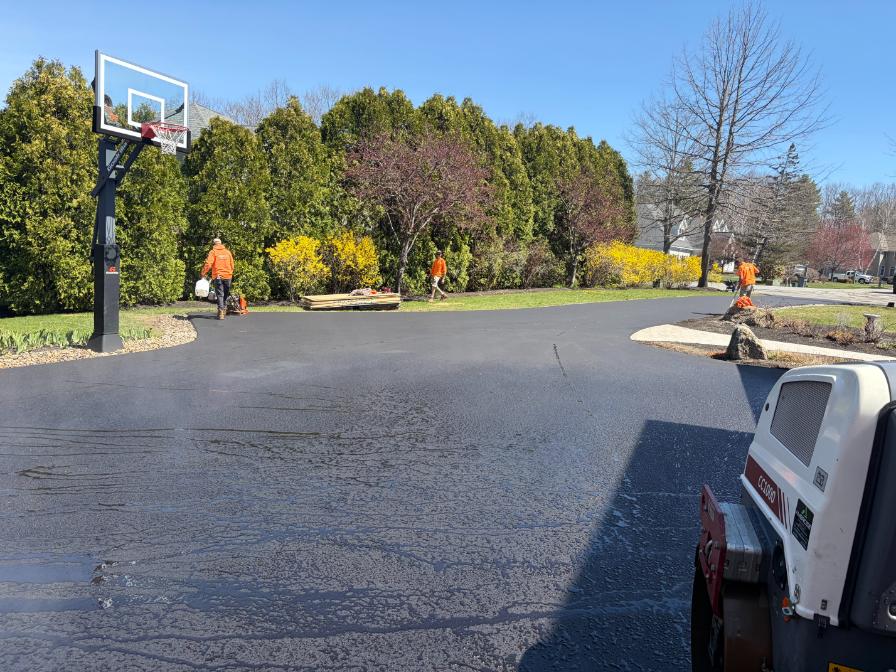
Your driveway may look smoother in some spots than in others. Asphalt is a mix of different sized stones, sand, liquid asphalt, and other materials, so some variation in surface texture is natural. Areas that were raked and spread by hand, such as around walkways, garage aprons, and tight corners, may also look slightly different from sections laid by the paving machine. This natural variation is a sign of quality asphalt paving craftsmanship.
What to Avoid
Gasoline, motor oil, antifreeze, power steering fluid, and transmission fluid all break down the liquid asphalt that holds your driveway together. Clean up spills quickly, and fix vehicle leaks as soon as you notice them. Keeping your driveway free from chemical damage is essential to maintaining the structural integrity of your asphalt surface.
Spring Maintenance
As the ground freezes and thaws through a New Hampshire winter, it expands and contracts, which can open small hairline cracks. Once frost is out of the ground in spring, fill these cracks with a quality crack filler. This keeps water from getting underneath and turning small cracks into potholes or heaves. Regular spring maintenance is a key part of professional driveway care that protects your long-term investment.
Questions About Your Driveway? We’re Here to Help
Porter Paving serves homeowners in Meredith, Tilton, Moultonborough, Bristol, New London, Sunapee, and communities throughout the Lakes Region. If you have questions about caring for your new driveway call us at (603) 286-8182.